
Every tag comes with a reason. Disagree once, and it learns.
No black box. Zero shows its reasons for and against, in plain words. Tell it once that it was wrong, choose how widely that applies, and it changes from the next email on.
Facts and prices checked 26 September 2026
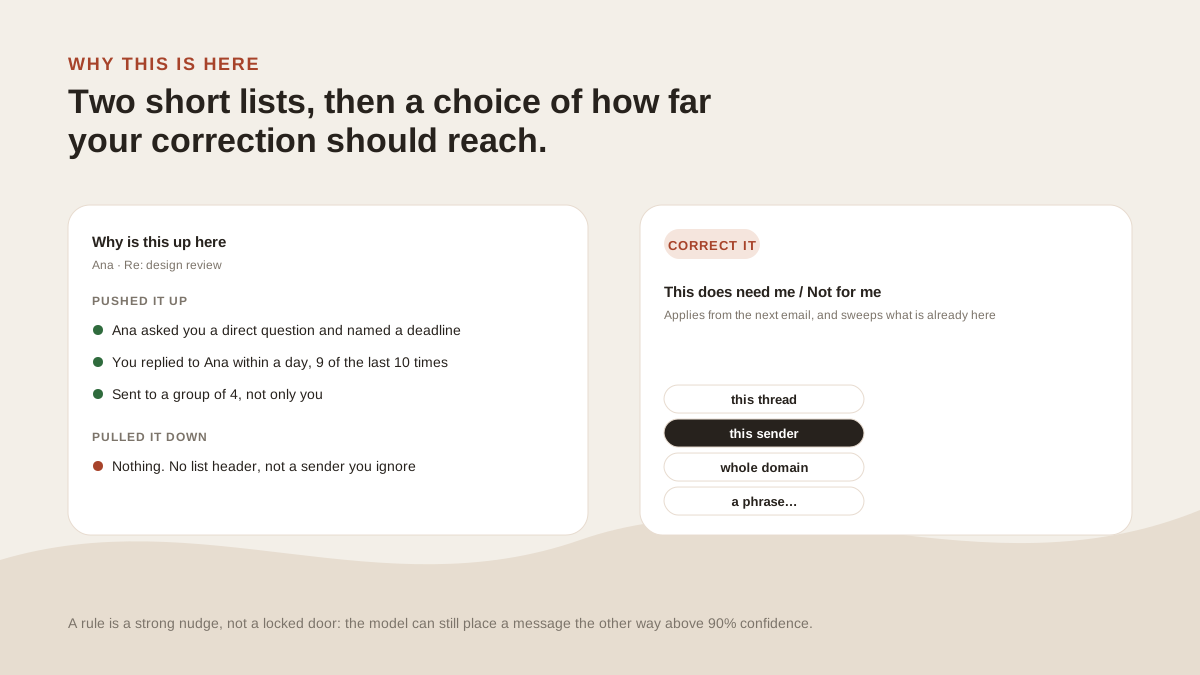
The row says Needs you. The obvious question is why, and the next one is what happens when you disagree.
Most AI inboxes answer neither. You get a score, you can mark it wrong, and nothing tells you what that changed. That's the part we built differently.
The ? on the row
Hover it and two short lists appear.
What pushed it up: Ana asked you a direct question and named a deadline. You reply to Ana nine times out of ten. Sent to you and three others, not a broadcast.
What pulled it down: carries a list header. From a sender you've never opened. First time this sender has written.
No percentages. The reasons come from the signals the triage layer used: the message itself, your reply history with the sender, whether you were addressed directly, and anything you've taught it.
The glyph appears once the ranking has seen enough of how you handle that mailbox and has scored the message. Before that there's nothing honest to show, so it stays off.
The row also carries a short caption for its lane, everywhere a thread is shown: Reply owed, Asks a question, Deadline, Notification only. One or two words, from the same pass that placed it.
Correcting it
Say the row is wrong. Two controls on it: promote, or mute. Either opens a scope picker.
- This thread. A local pin; nothing else changes.
- This sender. The address that sent it.
- Whole domain. Everyone at
@studiomira.com. - A phrase. Anything you type, matched against subject and sender.
Pick one and two things happen. Every later message is checked against the rule as it lands. And the matching threads already in your mirror are re-filed now, up to 500 per rule, so the list changes while you watch.
The rule is a locked door. Once you've muted a vendor's domain, nothing from it is promoted again until you remove the rule, however confident the model is about a single message.
That's blunt on purpose: an explicit instruction from you outranks a score. It also means a mute on a whole vendor domain will swallow the one message saying your account is about to be suspended. So mute narrowly, by sender or phrase, when a vendor also sends mail that matters.
One thing a rule can't do is promote a spoof. Mail that failed sender authentication is held down whatever you've taught.
What it has learned
A panel per mailbox, in two halves.
What it watches. The signals the ranking currently weighs most for you, in words: direct questions with a deadline, people you reply to quickly, mail sent to a lot of people, senders you never open.
They're worked out from how you handle this mailbox alone. It's an adaptive ranking, not an AI model, and none of it trains anything on your mail.
What you taught it. Every scoped rule you've made, with its scope. "Anything from @studiomira.com needs me, whole domain." "Weekly digest from Notion, not for me, this sender." Remove any of them from Settings.
That second list is your filing spec, written one correction at a time. Across everyone using MorningZero it held twelve rules on 20 September 2026: five by sender, five by thread, one by domain, one by phrase.
The number we watch
In the thirty days to 20 September 2026, 0.22 percent of the threads MorningZero triaged were overridden. The thread count includes older threads re-sorted during imports.
It's a small sample and it's mostly our own mail. But it's the figure that says whether the reasons are right often enough that you stop reaching for the picker.
What it won’t do
The limits, before you find them yourself.
A correction is a locked door, not a nudge. Mute a sender and nothing from that sender is promoted again until you remove the rule, however the model scores a message. The one exception is mail that failed sender authentication: an important rule can't promote a spoof.
A correction stays inside the mailbox you made it in. Teaching your work account that a client domain matters doesn't teach your personal account.
The retroactive sweep stops at 500 threads per rule. A very broad rule re-files the most recent 500 matches at once; older ones update as they're touched.
It doesn't explain in numbers. There's no confidence score on the row, because a percentage you can't act on is decoration.
Questions
Asked often enough to answer here.
Where do I see why an email was marked as needing me?
Hover the ? on the row. It lists what pushed the message up and what pulled it down. The row itself carries a short caption for its lane, like Reply owed or Notification only.
How fast does a correction take effect?
The next message from that sender, domain or thread is checked against the rule as it lands. Matching threads already in your mirror are re-filed at once, up to 500 per rule.
What scopes can I correct at?
This thread, this sender, the sender's whole domain, or a phrase you type. Both directions, promote and mute, work at all four.
Why is there no ? on some rows?
The ranking needs to have seen enough of how you handle that mailbox first, and the message has to have been scored by it. Until then there's nothing honest to show, so the glyph stays off rather than opening on an empty card.
Nothing sends itself
See it on your own mail.
Fourteen days, up to five mailboxes, no card. Connect the two you check most and watch the first morning sort itself.